
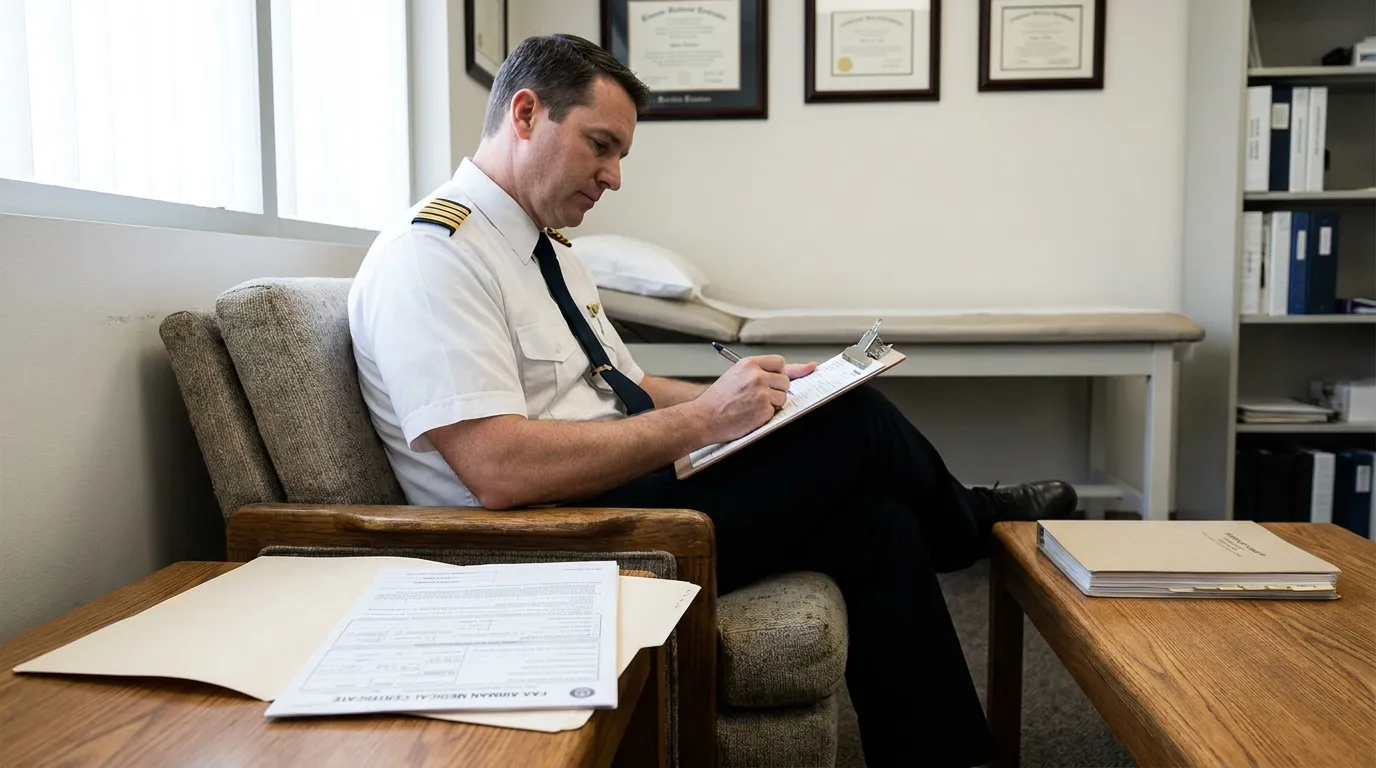
What Happens to Your FAA Medical Certificate After a Narcolepsy Diagnosis Is Rescinded?
Key Takeaways: A rescinded narcolepsy diagnosis does not automatically restore FAA medical eligibility. The FAA retains your complete medical history and evaluates each case individually. Under 14 CFR Part 67, narcolepsy is a disqualifying neurologic condition due to incapacitation risk. Even a corrected diagnosis remains in your permanent FAA record. Pilots must build a thorough evidentiary case with updated sleep studies, neurologist evaluations, and clinical narratives demonstrating the original diagnosis was incorrect. The two primary pathways are an Authorization for Special Issuance (time-limited, requires renewal) or a Statement of Demonstrated Ability (SODA) for static conditions. Processing delays through the AMCD are common, making complete, well-organized initial submissions essential. An experienced FAA medical certification attorney can help present corrective evidence addressing the FAA’s specific concerns.
Few words carry as much weight on an FAA medical application as "narcolepsy." Even when a physician later rescinds that diagnosis, the FAA does not erase it from your record. Pilots who have had their FAA medical denied for narcolepsy often discover that recertification requires navigating a complex regulatory process. Understanding how the FAA treats a rescinded narcolepsy diagnosis is critical for any aviator trying to reclaim flying privileges.
Reach out to the Ison Law Firm today for dedicated support. Give us a call at [(855) 598-7338](855 598 7338) or contact us online to take the first step.

Why a Narcolepsy Diagnosis Triggers FAA Medical Denial
The FAA’s authority over pilot medical fitness originates from 14 CFR Part 67, which prescribes medical standards and certification procedures for airman medical certificates. This regulation sets forth neurologic standards under § 67.109 (and equivalent §§ 67.209 and 67.309 for second- and third-class certificates) that disqualify applicants with an established medical history or clinical diagnosis of epilepsy, disturbance of consciousness without satisfactory medical explanation, or transient loss of control of nervous system functions without satisfactory explanation. Under subsection (b), any other neurologic condition that the Federal Air Surgeon finds makes the person unable to safely perform airman duties is also disqualifying. Narcolepsy, characterized by sudden and uncontrollable sleep episodes, falls within these disqualifying criteria.
Because even brief incapacitation at the controls poses catastrophic safety risk, the FAA treats narcolepsy as a particularly serious disqualifier. Aviation safety is foremost, and each applicant’s medical history is evaluated based on incapacitation risk. Epilepsy, unexplained loss of consciousness, cardiac events, and insulin-dependent diabetes all trigger heightened FAA scrutiny under similar incapacitation analyses.
How a Rescinded Narcolepsy Diagnosis Still Affects Your FAA Medical
The FAA Looks at Your Entire Medical History
A narcolepsy misdiagnosis does not vanish from your FAA file simply because a new physician disagrees with the original finding. Under 14 CFR Part 67, a person is entitled to a medical certificate when they meet applicable standards based on medical examination and evaluation of that person’s history and condition. The key word is "history." Even a rescinded diagnosis remains part of the documented medical record that the Federal Air Surgeon reviews.
This means a pilot with a corrected or withdrawn narcolepsy diagnosis still faces case-by-case review. The FAA evaluates every applicant’s medical history individually. Pilots should expect the FAA to ask why the original diagnosis was made, what testing supported it, and what new evidence contradicts it.
The Documentation Burden Falls on You
Pilots pursuing recertification after an FAA medical rescinded diagnosis must build a thorough evidentiary record. This typically includes updated sleep studies, neurologist evaluations, and clear clinical explanation of why the original narcolepsy diagnosis was incorrect. The FAA will not accept a one-line letter from a new doctor at face value. If you previously disclosed a condition on your FAA Form 8500-8 or need to address a past omission, the stakes around documentation accuracy are even higher. Pilots in similar situations may benefit from understanding whether amending a prior 8500-8 is appropriate.
Pathways Back to Certification When FAA Medical Is Denied for Narcolepsy
Authorization for Special Issuance
A pilot who does not meet FAA medical standards may still obtain certification through an Authorization for Special Issuance granted at the Federal Air Surgeon’s discretion. This pathway allows a person who fails to meet established medical standards to demonstrate that flying duties can be performed without endangering public safety. For a pilot whose narcolepsy diagnosis has been rescinded, this process provides the formal mechanism to present corrective medical evidence.
In deciding whether to grant an Authorization or SODA, the Federal Air Surgeon considers the person’s operational experience and medical facts that may affect the ability to perform airman duties. These factors include the combined effect of failure to meet more than one requirement of Part 67 and the prognosis derived from professional consideration of all available information. Updated sleep studies, revised neurologist opinions, and comprehensive clinical narratives all feed into this analysis.
The Federal Air Surgeon may require additional evaluation before granting an Authorization. This can include a special medical flight test, practical test, or supplemental medical evaluation.
Statement of Demonstrated Ability (SODA)
For conditions that are static or nonprogressive, the FAA may grant a Statement of Demonstrated Ability (SODA) instead of a time-limited Authorization. Under 14 CFR § 67.401(b), a SODA may be issued to a person whose disqualifying condition is static or nonprogressive and who has been found capable of performing airman duties without endangering public safety. Unlike a Special Issuance Authorization, a SODA does not expire and authorizes a designated aviation medical examiner to issue a medical certificate of a specified class if the examiner finds the condition has not adversely changed.
Whether a SODA applies in a rescinded narcolepsy scenario depends on the specifics. If the FAA accepts that the pilot never truly had narcolepsy and any underlying sleep condition is stable, the SODA pathway may offer more permanent resolution. However, if residual symptoms or diagnostic ambiguity remain, the FAA is more likely to use the time-limited Special Issuance route.
| Pathway | When It Applies | Duration | Key Requirement |
|---|---|---|---|
| Authorization for Special Issuance | Pilot does not meet standards but can demonstrate safety | Time-limited; renewal required | Satisfy the Federal Air Surgeon that duties can be performed safely |
| SODA | Condition is static or nonprogressive | Does not expire | Demonstrate condition will not endanger public safety |
What to Expect During the FAA Review Process
Delays and Administrative Challenges
Pilots with conditions requiring FAA review may face significant processing delays. Applications that cannot be approved at the AME’s office must be forwarded to the FAA’s Aerospace Medical Certification Division (AMCD), and ongoing administrative and technology challenges continue to result in lengthy wait times. A rescinded narcolepsy diagnosis FAA case adds complexity because the AMCD must evaluate both the original diagnosis and the corrective evidence.
Renewal and Ongoing Obligations
Special Issuance certificates come with built-in conditions and expiration dates. A certificate issued under an Authorization expires no later than the end of the validity period or upon withdrawal of the Authorization. To renew, the airman must again satisfy the Federal Air Surgeon with updated medical documentation. Pilots holding a Special Issuance after a narcolepsy-related denial should plan for periodic sleep evaluations and neurologist reports at each renewal cycle.
💡 Pro Tip: Keep a dedicated file with every sleep study, neurologist report, and clinical letter related to your rescinded narcolepsy diagnosis. Organized, chronological documentation significantly strengthens your case when the AMCD reviews your application.
How This Compares to Other Common FAA Medical Denials
The FAA applies the same risk-of-incapacitation framework to narcolepsy that it uses for other serious conditions. Pilots with a history of depression, anxiety, ADHD, bipolar disorder, or substance dependence face parallel challenges requiring condition-specific documentation to pursue recertification.
A narcolepsy misdiagnosis scenario shares common ground with cardiac event cases or epilepsy histories. The difference with a rescinded diagnosis is that the pilot’s primary argument is that the disqualifying condition never truly existed, which shifts the evidentiary focus toward disproving the original finding rather than demonstrating stability or treatment compliance.
An FAA medical denied narcolepsy lawyer can help you organize the medical evidence and present it in a way that addresses the FAA’s specific concerns.
Frequently Asked Questions
1. Can I get my FAA medical certificate back if my narcolepsy diagnosis is rescinded?
Yes, but rescission alone is generally not enough. You will likely need to pursue an Authorization for Special Issuance or a SODA through the Federal Air Surgeon by submitting comprehensive medical evidence demonstrating that the original diagnosis was incorrect and that you can safely perform flight duties.
2. How long does the FAA review take after a narcolepsy diagnosis is corrected?
Processing times vary considerably. Cases involving rescinded diagnoses require AMCD review, and administrative delays are common. Some pilots wait several months or longer. Building a complete medical file before submission can help reduce unnecessary back-and-forth requests.
3. Will the original narcolepsy diagnosis stay on my FAA record permanently?
Yes, your FAA medical file retains your full history. The FAA evaluates eligibility based on your complete medical history and current condition. A rescinded diagnosis does not disappear, but new evidence contradicting the original finding becomes part of that record and is considered in future determinations.
4. What medical documentation do I need to challenge a narcolepsy diagnosis with the FAA?
You should gather the following at a minimum:
- Updated polysomnography and Multiple Sleep Latency Test (MSLT) results
- A detailed neurologist report explaining why the original diagnosis was incorrect
- Clinical records from the diagnosing physician showing the basis for the original finding
- A narrative letter from your current treating physician summarizing the corrected assessment
5. Does a rescinded narcolepsy diagnosis affect my ability to hold a first-class medical certificate?
The neurologic disqualification criteria under 14 CFR §§ 67.109, 67.209, and 67.309 are substantively identical in text across all classes of medical certificates. However, the FAA does not apply identical Special Issuance or SODA pathways regardless of certificate class: under 14 CFR § 67.401(e), the Federal Air Surgeon applies a distinct and more lenient risk standard when evaluating Authorization or SODA requests for third-class (private pilot) applicants compared to first- and second-class (commercial and ATP) applicants.
Protecting Your Certificate After a Narcolepsy Misdiagnosis
A rescinded narcolepsy diagnosis does not automatically restore FAA medical eligibility, but it does open a clear regulatory pathway forward. The process requires thorough documentation, patience with the AMCD review timeline, and precise understanding of how 14 CFR Part 67 governs eligibility determinations. Pilots who approach this process with organized medical evidence and a clear strategy stand in the strongest position to regain their certificates.
The Ison Law Firm represents pilots nationwide who are navigating FAA medical certification challenges. Call (855) 598-7338 or reach out online to discuss your situation and take the next step toward recertification.