

Your AME Deferred Your Medical After a Pacemaker: Here Is What Comes Next
Key Takeaways: A pacemaker deferral is regulation-driven, not a denial. 14 C.F.R. Part 67 names permanent cardiac pacemaker implantation as disqualifying for all medical classes, removing your AME’s authority to issue in the office. Your file moves to the Aerospace Medical Certification Division in Oklahoma City for documentation review. Under § 67.401, the Federal Air Surgeon may grant a discretionary Authorization for Special Issuance when you demonstrate the duties can be performed safely. The FAA protocol requires a two-month recovery period after implantation, followed by a complete submission containing a cardiologist narrative, hospital and device records, and objective testing including labs, a 24-hour monitor, echocardiogram, and maximal graded exercise stress test. Incomplete submissions stall review, and the Authorization is time-limited, requiring recurring device checks and current testing at renewal.
A deferral after pacemaker implantation is not a denial. Under 14 C.F.R. Part 67, permanent cardiac pacemaker implantation is an explicitly disqualifying cardiovascular condition, meaning your Aviation Medical Examiner has no authority to issue a certificate in the office and will forward your file to the FAA. What follows is a documentation-driven review at the Aerospace Medical Certification Division in Oklahoma City. The outcome depends on whether your submission is complete, current, and internally consistent, as well as your individual clinical picture. Pilots who understand the protocol before mailing the packet have a smoother path.
Reach out to the Ison Law Firm today for dedicated support. Give us a call at 855-598-7338 or contact us online to take the first step. The Ison Law Firm is based in Florida and represents pilots nationwide.
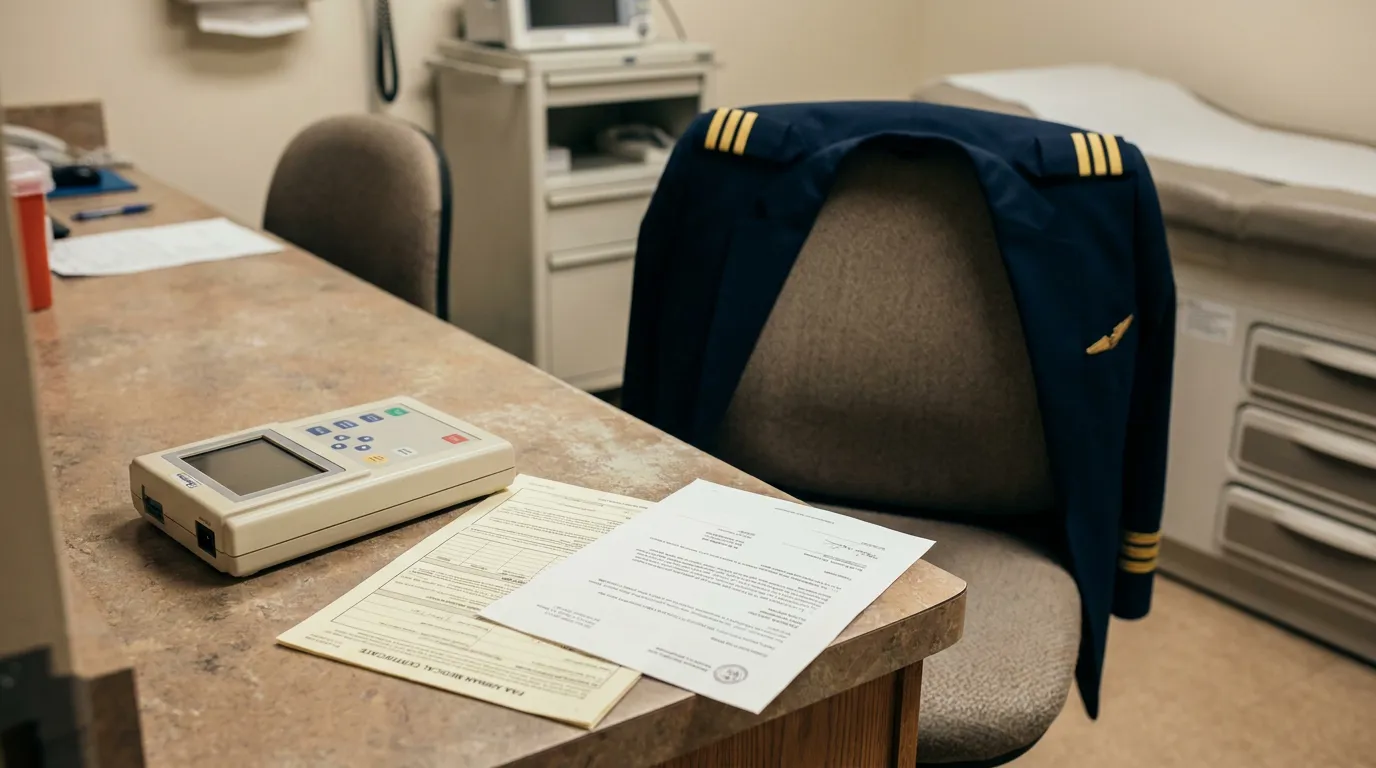
Why a Pacemaker Triggers an Automatic Cardiac Deferral
The disqualification is written into the medical standards themselves. The cardiovascular standards in Part 67 list permanent cardiac pacemaker implantation among conditions that bar issuance under ordinary standards. Because a substantively identical cardiovascular list appears in the first, second, and third class medical standards in Subparts B, C, and D (§ 67.111, § 67.211, and § 67.311), a pacemaker defers a private pilot’s third-class exam the same way it defers an airline transport pilot’s first-class exam.
This is the same structural reason other named conditions get deferred. Insulin-treated diabetes, seizure disorders, certain traumatic brain injuries, coronary heart disease requiring treatment, bipolar disorder, and substance dependence follow the same procedural path: the AME cannot issue, the file goes to the FAA, and the pilot’s path forward runs through Special Issuance. Understanding that the deferral is categorical changes how you approach the response.
Deferral Is Not Denial: The Special Issuance Framework
Subpart E of Part 67 provides the path forward. Under 14 C.F.R. § 67.401, the Federal Air Surgeon may grant an Authorization for Special Issuance of a Medical Certificate to an applicant who does not meet the standards of Subpart B, C, or D but who demonstrates that the duties authorized by the class of certificate can be performed without endangering public safety. That authority is discretionary.
Once the Authorization is in hand, a certificate may follow. The pacemaker remains a disqualifying condition on paper while the pilot flies under the Authorization, typically subject to any operational limitations the Federal Air Surgeon imposes. Some pilots who have previously held a medical certificate may explore BasicMed for certain operations, though eligibility is fact-specific. If you want a broader walkthrough, our discussion of what happens after a deferred medical application covers the process.
💡 Pro Tip: Ask your AME for a copy of everything transmitted to the FAA on the day of your exam. Reconstructing your file months later is far harder than saving it up front.
The Two-Month Recovery Window Before the FAA Will Look at Your Case
The FAA will not evaluate a pacemaker case immediately after implantation. The agency’s pacemaker evaluation protocol calls for a two-month recovery period after implantation to allow for recovery and stabilization, with the submission package due afterward. This window is when you gather hospital records, schedule cardiac testing, and confirm your cardiologist understands what the FAA requires. Because the protocol is agency guidance rather than regulation, the FAA can update it or request additional information, so confirm the current version before you begin.
What the Cardiologist Narrative Must Address
A general "cleared for activity" letter is insufficient. The FAA expects a narrative documenting the interim and current cardiac condition, functional capacity, cardiac history, and medications, and separately evaluating pacemaker function. That evaluation should address programmed parameters, exclusion of myopotential inhibition and pacemaker syndrome, ERI/EOL status, and battery voltage.
The Records and Device Data You Must Produce
The hospital record request is broader than most pilots expect. The protocol calls for the history and physical, operative report, discharge summary, any catheterization or ischemia workup, and all ECG tracings. Device identification should include the make of the generator and leads, model, and serial number.
Objective Testing Is Mandatory, Not Optional
Four categories of testing are required under the protocol:
- Laboratory work including HbA1c and full lipid profile
- A cardiac monitor of at least 24 consecutive hours reporting ectopic burden, pauses over 2.0 to 2.5 seconds, heart rate histograms, and percent time in atrial fibrillation or flutter
- A current 2-D echocardiogram with Doppler
- A current maximal graded exercise stress test
The FAA has stated that evaluation of pacemaker dependency is no longer required for any class as of 08/25/2021. Pilots working from older checklists sometimes still chase that testing unnecessarily.
How AMCD Review Works After a FAA Medical Deferred Pacemaker Case
Review occurs at the Aerospace Medical Certification Division in Oklahoma City, and the FAA asks that all material arrive in a single mailing. Every document should carry the airman’s full name and date of birth, and no consideration can be given for Special Issuance until all required data has been received. An incomplete packet generally stalls. The optional Pacemaker Status Summary form may help the review when completed properly.
The FAA may also require more than paperwork. Section 67.401 provides that the Federal Air Surgeon may authorize a special medical flight test, practical test, or medical evaluation, which is why some pacemaker files generate additional cardiology testing or in-person evaluation before an Authorization issues.
| Stage | What Governs It | Practical Risk Point |
|---|---|---|
| AME exam | Part 67 Subparts B, C, D cardiovascular standards | AME generally must defer; no on-the-spot issuance |
| Two-month wait | FAA pacemaker protocol | Testing scheduled too early may be rejected as premature |
| Packet submission | FAA pacemaker protocol | Missing records may halt review |
| Authorization decision | 14 C.F.R. § 67.401 | Discretionary; additional evaluation possible |
| Renewal cycle | 14 C.F.R. § 67.401 | Certificate may expire with the Authorization |
Keeping the Authorization: Renewal Is a Recurring Obligation
A Special Issuance is time-limited by design. A certificate issued under § 67.401 expires no later than the end of the period stated in the Authorization. The Authorization may be withdrawn if the airman fails to comply with its terms or the condition changes; the airman must again satisfy the Federal Air Surgeon to obtain a new certificate or Re-Authorization. In some cases, the FAA authorizes an AME to reissue at renewal under the AME Assisted Special Issuance process if the required current testing is in hand. This generally means building a recurring calendar around your device checks, echocardiograms, and cardiology follow-up.
Currency requirements are where otherwise strong files can fall apart. Stale testing, a device interrogation predating the reporting window, or a cardiologist letter omitting battery status can each turn a routine renewal into a second cardiac deferral.
💡 Pro Tip: Give your cardiologist the FAA protocol itself, not a summary. Physicians outside aviation medicine rarely know that ERI/EOL status and lead serial numbers are required elements.
What Happens if the Authorization Is Not Granted
Part 67 Subpart E contains the downstream procedural framework. A denial is a defined administrative event with its own response pathway and deadlines, including reconsideration by the Federal Air Surgeon and, for a denial issued by the Federal Air Surgeon, the possibility of review by the National Transportation Safety Board under 49 U.S.C. § 44703.
Timing and completeness generally drive outcomes more than advocacy does. Working with a faa medical deferred pacemaker lawyer can help you assemble a packet that responds to the protocol, though no firm can expedite the FAA’s internal processing and no outcome can be promised. Our office works with pilots regardless of where they live or fly.
Frequently Asked Questions
1. Does a pacemaker permanently disqualify me from flying?
Not necessarily. The condition is disqualifying under Part 67 standards, but § 67.401 allows the Federal Air Surgeon to grant an Authorization for Special Issuance when the applicant demonstrates the duties can be performed safely. Outcomes depend on individual clinical circumstances.
2. Can my AME issue my certificate if my cardiologist clears me?
Generally, no. Because permanent pacemaker implantation appears in the cardiovascular standards for all three classes, the AME must defer the application to the FAA regardless of treating physician conclusions, unless the FAA has already issued an Authorization permitting AME-assisted reissuance.
3. How long after implantation can I submit my package?
The FAA protocol calls for a two-month recovery period after implantation before case evaluation, with the submission package following that window.
4. Do I still need pacemaker dependency testing?
The FAA has stated that dependency evaluation is no longer required for any class as of 08/25/2021, though the agency may request additional information in particular cases.
5. What happens if I send documents in separate mailings?
The FAA asks that all material be submitted in one mailing with your full name and date of birth on every page. No Special Issuance consideration is given until all required data has been received.
Bringing the Pieces Together Before You Mail Anything
A pacemaker deferral is a procedural checkpoint, not a verdict. The regulatory framework is clear about the standard, and the FAA protocol is clear about requirements, so the practical work lies in producing a complete, current, and technically responsive package after the required recovery period. Pilots who treat aeromedical certification as a documentation exercise, rather than a persuasion exercise, generally fare better. Every file turns on its own facts.
Reach out to the Ison Law Firm for guidance on your pacemaker deferral. Call (855) 598-7338 or contact us now online. Please note that the firm does not offer free consultations. The Ison Law Firm is based in Florida and represents pilots nationwide.
Disclaimer: This content is for informational purposes only and is not legal advice. Every case is unique, and results may vary. Consult an attorney about your specific circumstances.